


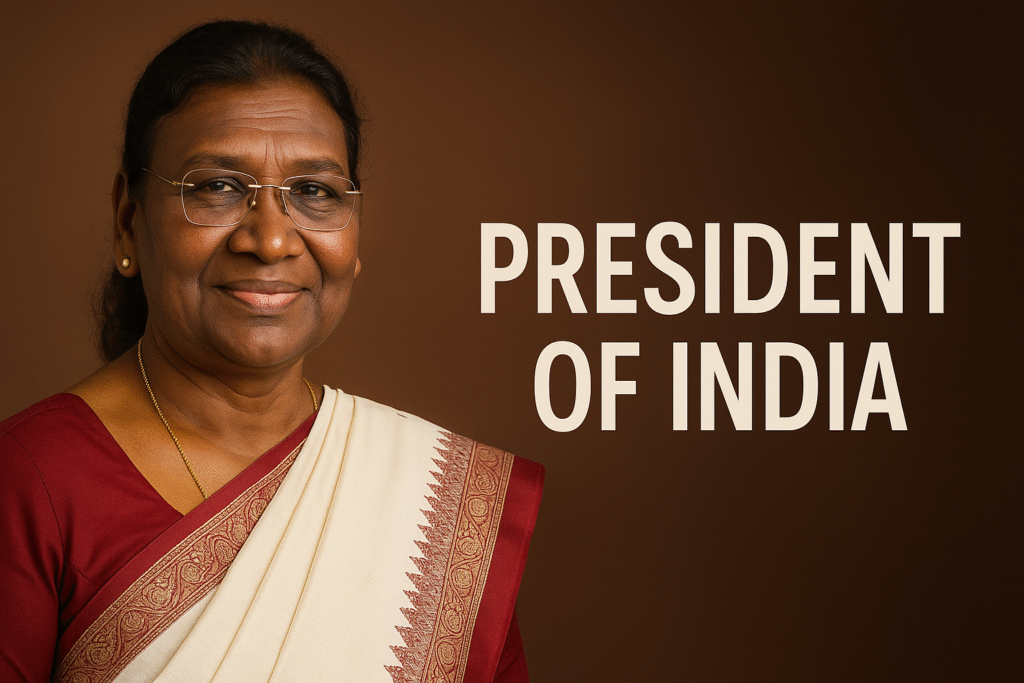
The Importance of Understanding the President’s Role
Who is the President of India?
The President of India is the country’s ceremonial head of state and its supreme constitutional head. Even though the position seems to be extremely symbolic, the President’s authority reaches into each and every branch of government—executive, legislative, judicial, fiscal, and even in times of emergencies. But to what degree does the President actually wield power?
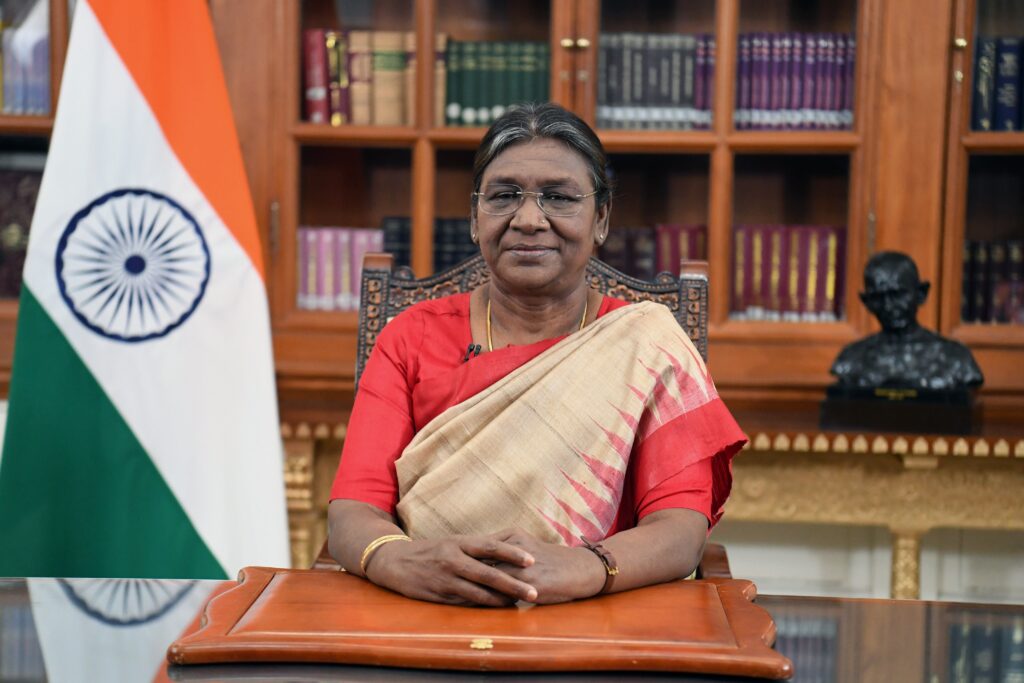
Symbolic Head or Actual Authority?
The President is occasionally called a “rubber stamp,” yet one barely touches the surface of reality. Whereas the President must adhere to the advice of the Council of Ministers, he still retains immensely important responsibilities and powers—some of which have the ability to reshape Indian politics, especially in the face of a crisis.
Explaining Article 52–53 in Simple Language
Article 52 is the basis of the office of the President. Article 53 vests in the President all the executive authority of the Union, which may be exercised either by himself directly or through subordinate officers subject to their control. Think of the President as the person through whom the government machinery functionally works even though somebody else is practically in charge.
“Can the President really block a law from becoming real?”
The President’s Executive Powers
All the executive decisions taken by the Government of India are taken in the name of the President. Ranging from the assenting of bills into acts to the appointment of major individuals, the President’s executive powers are vast.
Chief Executive Powers Are:
Appointments: President appoints appointments to the Prime Minister, state Governors, Chief Justice and Supreme Court and High Court judges, Attorney General of India (AGI), Comptroller and Auditor General (CAG), members of UPSC, Election Commission, etc.
Recently, President Droupadi Murmu has also appointed a number of Governors and judges, thereby strengthening the government continuity.
Articles Defined:
- Article 53 vests executive authority in the President.
- Article 74 provides that the President shall function on the advice of the Council of Ministers.
Discretionary Powers: The President has freedom in a hung Parliament to invite a leader to constitute the government.
The President’s legislative powers
The President plays an important part in both the initiation and the completion of the legislative process.
Legislative Roles:
- Summoning and Dissolving Parliament: The President summons, prorogues, and dissolves the Lok Sabha on his own.
- Inaugural Address: When every session of Parliament begins, the President addresses both Houses of Parliament, outlining the agenda of the government.
Approval of Legislation:
- May assent, withhold assent, or resubmit a non-money bill for reconsideration.
- Veto powers
- Absolute Veto.
- Suspensive Veto
- Pocket Veto.
- Nominations:
- 12 Members to Rajya Sabha (from disciplines such as art, science, literature).
- 2 Anglo-Indian Members to Lok Sabha (until repealed by 104th Amendment in 2020).
Example: A previous President once refused to sign a contentious bill, and this raised serious public outcry.
“At today’s speech, the President emphasized imperative reforms in Parliament. #DemocracyInAction”

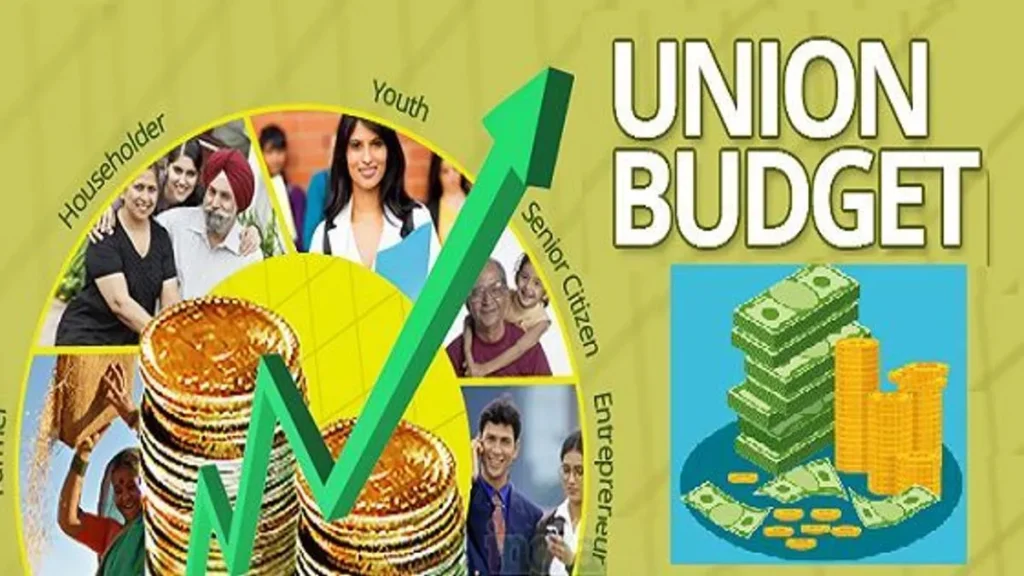
Union Budget Role and Financial Powers
On the financial front, the President enjoys wide-ranging powers, but usually exercised after taking directions from the government.
Financial Powers:
- No Money Bill cannot be brought in without the President’s recommendation.
- Union Budget is tabled formally in the President’s name.
- India’s Contingency Fund enables the President to sanction expenditure in the event of unexpected requirements.
- Finance Commission is constituted every five years to distribute money resources between Centre and States.
Money Bill vs. Financial Bill
The Money Bill is all about issues like borrowing and taxes, requiring the President’s advance approval.
The Financial Legislation may contain financial matters but also other provisions.
Judicial Powers: Pardons, Appointments, and So On
The President has an important judicial role, especially in dispensing justice by exercising clemency powers.
Judicial Duties:
- He appoints members to the High Courts and the Supreme Court.
- Article 143: Can seek the advisory opinion of the Supreme Court.
- Article 72: Pardoning powers:
- Pardon: Complete forgiveness of the sentence.
- Commutation: Decrease in punishment form.
- Remission: Shorter sentence length.
- Respite: Lesser sentence due to circumstances.
- Reprieve: Temporary stay of execution.
Real-Life Example: Presidents have rejected or postponed mercy requests in instances such as Yakub Memon or Afzal Guru, which have ignited nation-wide debates.
Though ceremonial, the President is the representative of India in foreign affairs and the final command in military affairs.
Diplomatic and Military Roles:
- He executes agreements and treaties on behalf of India.
- Hosts foreign leaders and makes state visits.
- Supreme Commander of Armed Forces: May declare war or peace (subject to approval by Parliament).
“Why ceremonial doesn’t mean powerless”: During crisis, the President’s decisions can be a matter of life and death.
Emergency Powers: Articles 352, 356, 360 Meaning
During periods of national crises, the President is the mainstay of India’s emergency administration.
Types of Emergencies:
- Article 352: National Emergency
- Declared on account of war, external aggression, or armed rebellion.
For instance: Indira Gandhi’s Emergency of 1975.
- Article 356: President’s Rule in States
- When a state cannot function per the Constitution.
Example: Bihar 2005, where misuse was alleged.
- Article 360: Financial Emergency
Though never formally declared, it may be invoked in times of financial instability.
Chronology of Past Crises:
1975–77 (National) | 130+ times President’s Rule applied in states
Note: All emergencies must be approved by Parliament within 2 months.
Ordinance Making Power: Why It’s Controversial
When the Parliament is not sitting, the President can issue ordinances to promulgate laws.
Article 123 Powers:
Permits enactment by ordinance, albeit on the advice of the Council of Ministers.
Example: In A.K. Roy vs Union of India, SC cautioned against overuse of ordinances.
Dr. Ambedkar’s Take: Ordinance-making is an emergency power, not a shortcut to legislation.
“Should codes take the place of discussion? That is the real threat to democracy.”
Limitations and Symbolism
President vs Prime Minister Despite very wide powers on paper, the President is subject to the advice of the Council of Ministers and the Prime Minister under the Constitution.
- Article 74: President will act in accordance with the advice of the Council of Ministers.
- De Jure vs De Facto: President = de jure (legal) head.
- Prime Minister = de facto (real) head.
Court rulings have consistently clarified this hierarchy, simultaneously reaffirming the President’s position as a guardian of the Constitution.
Conclusion
The President of India is not just a figurehead. From checks and balances of the Constitution to national emergencies, the office is essential to governance—sometimes working unseen but forcefully.
As an actual guardian of the Constitution, the President keeps the spirit of democracy alive, keeping it grounded in its very essence.
Your Turn: What do you think is the President’s most misunderstood power?
Let us know in the comments below!