


ISRO: India’s gateway to space
The Indian Space Research Organisation has played a dominant role in India’s remarkable advancement in the Universe exploration. Since it was established in 1969 in Bengaluru, Karnataka it secures the foremost position in India’s outburst growth by innovating, discovering & unveiling the outer space.
From the economic aspects to the social aspect it made a positive impact on society by creating millions of vacancies and driving technological advancement to its greater heights that can only be achieved under the present chairman of ISRO Dr. S. Somnath.

With its endless advancements in the technology sector & deeper universe exploration. Dr. S. Somnath played a major role in pushing India to unveil unexplored cosmic parts with deepening the roots of space exploration as a major pillar to nation future activities.
ISRO’s Recent Major Missions
Moving further into space missions it uses two of their most advanced vehicles , PSLV (Polar Satellite Launch Vehicle) & GSLV (Geosynchronous Satellite Launch Vehicle). These two are the pillars of Indian Space Research Organisation Strengthening the core of India’s space exploration programme

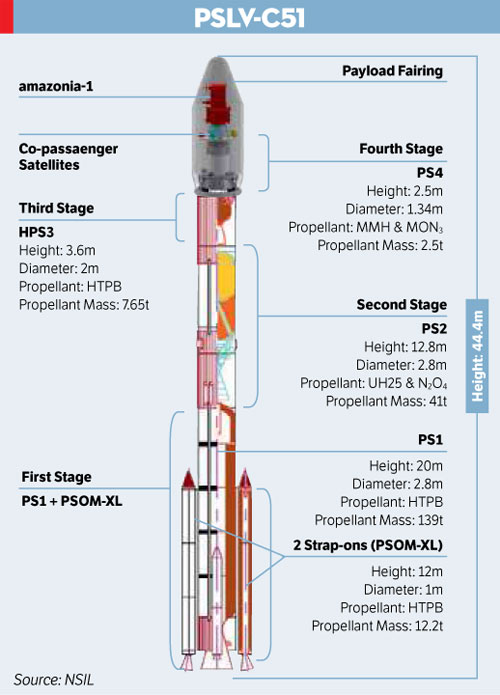
The PSLV also known as ISRO’s WORKHORSE is renowned for its reliability and the cost effectiveness. PSLV is also used for Commercial satellite launches which played a major role in achieving historic missions like Chandrayaan-1 India’s first lunar mission and Mangalyaan India’s first mars mission.

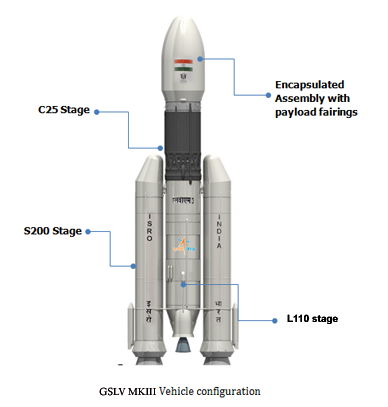
On the other hand GSLV is known for its heavy powerforce that is capable of launching heavy satellites into geosynchronous transfer orbit & into deeper cosmos like we did on Chandrayaan-2.
India’s path to moon exploration has been one of the most awaited milestones and learning ones, with Chandrayaan-2 and the Chandrayaan-3 are considered worth turning points. Chandrayaan-2 that was launched on 22 july 2019 was the massive GSLV MK3 rocket was developed to examine the south pole of the moon which has deposits of a water-ice substance.
The Chandrayaan-2 includes An Orbiter that captures stunning visualizations & crucial scientific information regarding the moon, exosphere & mineral content of the moon’s land. It also consists of Vikram Lander & Pragyan Rover that was designed to make the landing easy but due to technical glitches it lost contact during descent.
Chandrayaan-3 India’s second attempt for a Lunar Landing that was launched on 14 july 2023 aboarding an LVM3-M4 rocket. It was considered as an upgraded and more advanced version of its earlier design with improved lander and rover that was attached with better sensors and better mobility features. Both the missions are critically important in exploration of lunar water ice content, surface tensions & mineral content.
ISRO’s Advancement in satellite technologies
As we all know ISRO has made significantly above the head advancements in satellite technology, enhancing communication, navigation & earth observation capabilities. All these can be only achieved by deploying cutting edge satellites, communication satellites like GSAT series , Navigational satellites like NAVIC & foremost earth observation satellites like RISAT-2B and INSAT.


It uses the GSAT series of satellites for communication. This series has revolutionised telecommunication, internet connectivity, broadcasting & disaster management. The GSAT-6A & GSAT-29 enables high speed data transmission while the GSAT-11 & GSAT-19 improves the overall broadband connection across india. These satellites support telemedicines, e-learning & emergency communications in case of disaster caused regions ensuring nationwide connectivity.
We have Navigational satellite NAVIC that stands for (Navigation With Indian Constellation) that provides accurate positioning services across India and surrounding regions. NAVIC plays an important role for maritime investigation, disaster warning, defense, fisheries, aviation and emergency response systems (SOS). NAVIC outburst growth enhances India’s self reliance in navigation technology.
They also have earth observation satellites named RISAT-2B (Radar Imaging Satellite) that supports climate monitoring, agriculture, national security & resource mapping by providing high resolution images & surveillance.
ISRO’s Human Spacelift Program – Gaganyaan


The Gaganyaan mission concedes India’s first human spacelift program, an ambitious journey leading towards crewed space exploration. This programme led by ISRO aims to mark India as the fourth nation after the US, China & Russia to send humans into space.
It aims to send three Astronauts also known as JUGGERNAUTS into Low Earth Orbit on 400 altitudes for three days. The missions also covers various diameters like:
- Crew module is a specially designed capsule that provides advanced life support systems, navigation controls & re-entry mechanisms to ensure astronauts safety.
- GSLV Mk3 is India’s most powerful launch rocket that is further modified to carry another human rated spacecraft
- Astronaut Training ISRO has recently built an alliance with Russia’s Roscosmos to make Indian astronauts familiar with Zero gravity adaptation, space operations & survival techniques for long missions.
- Vyom Mitra is the Humanoid robot that is designed to simulate human functions without human interactions in test flights.
- Heat Shield & Parachute Test is conducted to ensure re-entry capabilities and ensure a safe splashdown, several heat shields has been installed in order to maintain specific temperature of capsule
- Radiation & Microgravity Studies to study space conditions and to enhance humans health and safety measures
Gaganyaan plays an important role in building a roadmap for India’s human space exploration missions like Gaganyaan-2 & space station development which aims for a quite long term human presence in space, including an Indian Space Station by 2035.
Also they have visioned lunar exploration such as Chandrayaan-4 & Bhavya Mission. ISRO aims to send humans to mars by 2040 with proper development of life supporting technologies and advanced propulsions. It can be achieved by expanding partnerships with various space agencies like NASA, ESA, ROSCOSMOS for joint ventured space missions
International Collaborations & Achievements
On September 30,2014, a partnership was jointly developed with NASA and ISRO and launched Nassar. The targeted mission is to launch in 2024. NASA is contributing to the mission by providing high rate communication subsystems for science data, GPS receivers, l- band synthetic aperture radar, a solid state recorder , and a payload data system.


The Indian Space Research Organisation (ISRO) has teamed up with NASA ,JAXA, and ESA for various events including Earth Observation ,human spaceflight and lune SRO exploration.
One significant partnership is the NISAR mission ,scheduled for launch in 2025. ISRO exploration. It has established a union with top space agencies, including NASA . This venture changes the impact of ecosystems on natural disasters.
They actively contributes its expertise and satellite data to promote natural disaster management through multiple multi-agency organisations such as
- International Charter for Space and major Disasters
- Sentinel Asia and Unspider
The scope of International cooperation has become wider and diverse ,as it has made huge progress in recent times from carrying rockets on bicycles to putting Indians on the Moon. It has gained significant success and worldwide recognition.
Future Plans & Innovations
The major scientific objectives of the Aditya L1 mission include studying solar atmospheric dynamics, investigating the physics of chromospheric and coronal heating in partially ionized plasma, and understanding the Initiation of coronal mass ejections , and flares.
This is India’s first solar observatory which was launched on September 2, 2023 and on January 6,2024 it came to its designated halo orbit around the Sun-Earth Lagrange Point L1.
The mission, well named Shukrayaan-1 aims to gather valuable insights into Venus atmosphere ,structure and geology using advanced scientific instruments. By the year 2028, India’s planned Venus mission is expected to launch, as per current data.
The Gaganyaan mission is now set to launch in late 2026, instead of the original 2025 plan. This delay is to make sure the mission is safe and successful.
Conclusion
The Indian Space Research Organisation (ISRO) is now a space exploration world leader with India’s magnificent strides in Satellite technology , Interplanetary exploration, and low-budget launch ability.
From the accomplishment of Chandrayan and Mangalyaan to the Gaganyaan ambitious human spaceflight missions,ISRO continues to push the limits. Its contribution to communication , navigation and Earth observation has transformed India’s technological landscape, and international cooperation further elevates its global presence.
In the upcoming years, ISRO future projects, including missions to traverse the sun and venus , and the establishment of reusable launch vehicles, show its dedication to leading the pack in space exploration. Despite challenges, ISRO’s strength stands tall against all odds.